
Mastering Fly Fishing Techniques: Cast, Read, Present, Succeed

Casting Fundamentals That Build Precision

Place your thumb on top, lighten your grip, and let the rod track straight without a death hold. Stand shoulder width with relaxed knees, experiment with open or closed stances, and align your shoulders with the target. Share your favorite grip tweak for windy days.

Reading Water Like a Seasoned Guide

Follow foam lines; they are honest reporters of food travel. Trout hold beside seam lines, behind submerged rocks, and along soft pillows where fast meets slow. Cast above the seam, mend to match speed, and let the fly drift naturally. I once ignored a subtle pillow and missed a remarkable brown.

Smart Fly Selection Without Guesswork

Start by matching size, then shape, then color. Use a small seine or a quick look at the air and spiderwebs to identify life stages. Duns, spinners, emergers, and pupae each ride differently. Adjust your pattern to imitate posture and behavior, not just hue, and watch refusals vanish.

Smart Fly Selection Without Guesswork

If fish are rising consistently, go dry with thin tippet and perfect drifts. If rises are sporadic or absent, start with nymphs near the bottom and tweak weight. When visibility is poor or flows climb, reach for streamers, vary retrieve speed and depth, and trigger predatory instincts decisively.

Knots, Leaders, and Rigs You Can Trust

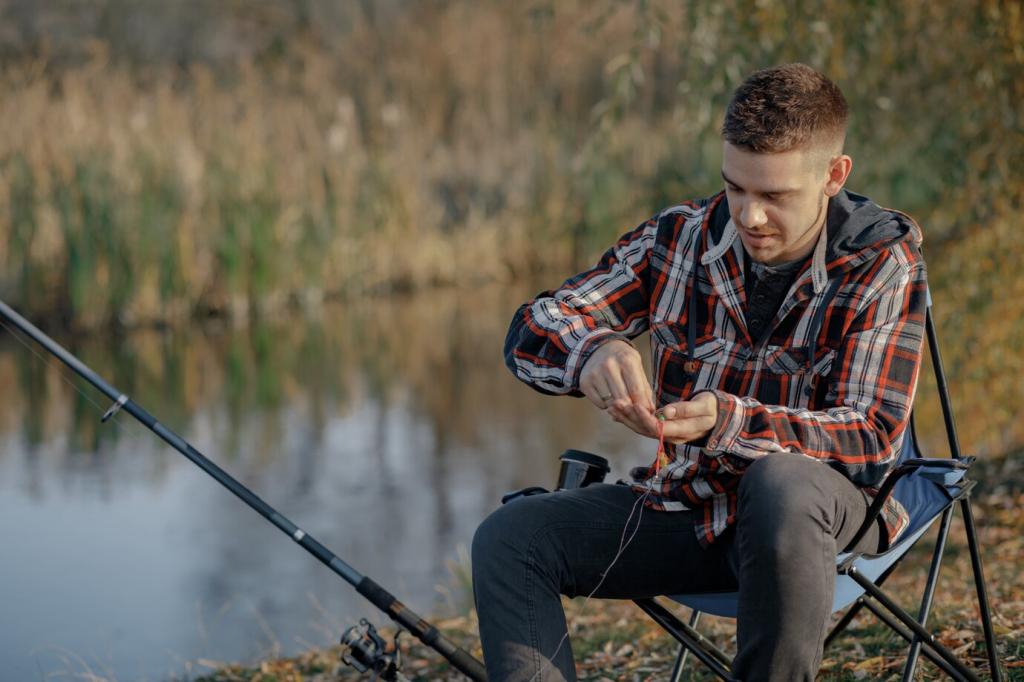
Master an improved clinch or Orvis knot for flies, a Non Slip Mono loop for lifelike motion, a double surgeon s for tippet joins, a blood knot for clean transitions, and a nail knot or loop to loop for leader attachment. Wet, seat, and test every knot with confidence.

Knots, Leaders, and Rigs You Can Trust

Use the classic 60 20 20 leader build, extending the butt for turnover and adding fine tippet for stealth. Long leaders shine for spooky fish and tiny dries; short stout leaders move streamers with authority. Euro nymph rigs favor straight mono with sensitive sighters for crisp feedback.

Hooking, Fighting, and Releasing Fish Responsibly

With dries and nymphs, lift firm but not wild, then shift the rod low and pull sideways to turn heads. For streamers, strip set to avoid pulling the fly away. Use the butt section, change angles, and steer fish from heavy current while maintaining steady pressure throughout.

Hooking, Fighting, and Releasing Fish Responsibly

Rubber mesh nets protect slime and fins, and barbless hooks speed safe releases without costing fish when pressure stays steady. Keep fish submerged, guide the head into the net, and unpin quickly. Carry hemostats and a dehooker. Add your name to our keep them wet commitment today.

Hooking, Fighting, and Releasing Fish Responsibly

Prep the camera, wet your hands, and keep the fish underwater until everyone is ready. Lift for two seconds, support properly, then release facing the current. Shoot burst mode to minimize time out of water. Share your most responsible hero shot and inspire better habits on your home water.

Hooking, Fighting, and Releasing Fish Responsibly

Lorem ipsum dolor sit amet, consectetur adipiscing elit. Ut elit tellus, luctus nec ullamcorper mattis, pulvinar dapibus leo.

Advanced Casting Upgrades for Real World Conditions

Time the haul with the acceleration phase, not after. Pull smooth, stop sharp, and let the line hand return to the pocket as the rod hand stops. Haul shorter and faster in wind. The day I synced both hauls, my back cast finally punched through relentless gusts.
When back cast room disappears, build a D loop and roll cast cleanly. On bigger water, single hand Spey moves like the Snap T and Single Spey change angles quietly. Respect anchors, watch your surroundings, and keep hooks away from friends and dogs along brushy banks.
Drive sidearm to lower the loop, present tuck casts to sink nymphs quickly, and use a slightly heavier leader for turnover. Shorten line, increase line speed, and try an elliptical Belgian cast to avoid tailing loops. Comment with your toughest casting scenario and we will suggest a drill.
Bonencio
Privacy Overview

This website uses cookies so that we can provide you with the best user experience possible. Cookie information is stored in your browser and performs functions such as recognising you when you return to our website and helping our team to understand which sections of the website you find most interesting and useful.